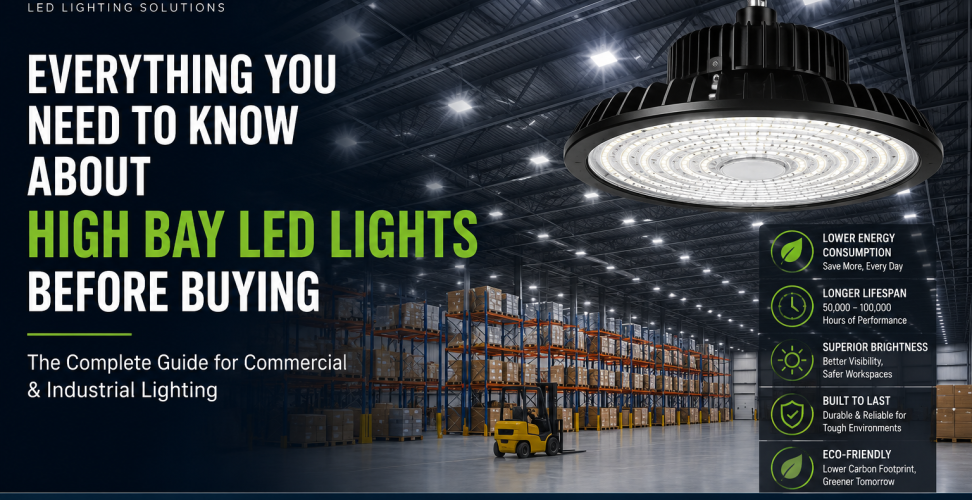
When it comes to illuminating large commercial and industrial spaces, choosing the right lighting system is one of the most important decisions you can make. Warehouses, manufacturing plants, gymnasiums, retail stores, distribution centers, workshops, and aircraft hangars all require powerful, energy-efficient lighting that delivers excellent visibility while minimizing operating costs.
This is where High Bay LED Lights have become the preferred solution for facility managers, business owners, contractors, and property developers. Compared to outdated metal halide or fluorescent fixtures, LED high bay lighting provides brighter illumination, lower energy consumption, longer service life, and significantly reduced maintenance expenses.
At J&H LED, we specialize in high-performance commercial and industrial lighting solutions that help businesses create safer, brighter, and more energy-efficient environments. Whether you’re upgrading an existing facility or designing lighting for a new construction project, understanding the key features of high bay lighting will help you make an informed investment.
In this blog, we’ll cover everything you need to know before buying high bay LED lighting, including benefits, applications, wattage selection, color temperatures, installation tips, and common mistakes to avoid.
What Are High Bay LED Lights?
High Bay LED Lights are lighting fixtures specifically designed for spaces with high ceilings, typically ranging from 20 to 45 feet or higher. Because light has to travel a greater distance, these fixtures produce high lumen output while maintaining excellent light distribution across large floor areas.
Unlike standard commercial lighting, high bay fixtures are engineered to eliminate dark spots, improve visibility, and create consistent illumination throughout the workspace.
Typical facilities using high bay lighting include:
- Warehouses
- Distribution centers
- Manufacturing plants
- Factories
- Automotive service centers
- Indoor sports facilities
- Retail warehouses
- Exhibition halls
- Airport hangars
- Storage facilities
These environments demand lighting that performs reliably under continuous operation while reducing maintenance downtime.
Why Businesses Are Switching to LED High Bay Lighting
Traditional lighting systems such as metal halide and fluorescent fixtures have served commercial buildings for decades. However, they consume more electricity, require frequent replacement, and often produce inconsistent lighting.
LED technology has transformed commercial lighting by offering significant operational advantages.
Lower Energy Consumption
One of the biggest reasons businesses upgrade to LED lighting is energy savings. LED fixtures consume substantially less electricity while producing the same—or even greater—light output.
Lower energy usage translates directly into reduced monthly utility bills, making LED lighting a smart long-term investment.
Longer Lifespan
Traditional commercial fixtures often require replacement every few years, especially in facilities operating around the clock.
LED fixtures typically last between:
- 50,000–100,000 hours
- Minimal lumen depreciation
- Reduced replacement frequency
This significantly lowers maintenance costs, particularly in facilities with ceilings over 30 feet where replacing fixtures can be expensive.
Better Visibility
Poor lighting can lead to:
- Workplace accidents
- Reduced productivity
- Eye strain
- Inventory mistakes
- Equipment operation errors
LED high bay fixtures provide bright, uniform illumination that helps employees work more safely and efficiently.
Instant-On Performance
Unlike metal halide lamps that require several minutes to warm up, LED fixtures reach full brightness immediately.
This feature is particularly useful for:
- Motion sensor systems
- Emergency lighting
- Occupancy-controlled warehouses
- Cold storage facilities
Environmentally Friendly
LED lighting contains no mercury and produces significantly lower carbon emissions due to reduced energy consumption.
Businesses looking to improve sustainability often choose LED lighting as part of their environmental initiatives.
Common Applications for High Bay Lighting
High bay lighting is suitable for almost any large commercial or industrial facility.
Warehouses
Warehouse operations depend heavily on excellent visibility for inventory management, forklift operation, and employee safety.
LED fixtures illuminate:
- Storage aisles
- Loading docks
- Packing stations
- Inventory shelves
Manufacturing Facilities
Manufacturing environments require bright lighting for precision work and quality control.
Proper illumination helps workers identify defects, operate machinery safely, and maintain production efficiency.
Distribution Centers
Large logistics facilities operate long hours and require dependable lighting that supports:
- Shipping
- Receiving
- Order fulfillment
- Conveyor systems
Retail Warehouse Stores
Wholesale retailers need lighting that showcases merchandise while creating a welcoming shopping experience.
Bright LED lighting improves product visibility and customer satisfaction.
Gymnasiums and Sports Facilities
Sports venues require consistent illumination across courts, tracks, and spectator seating.
LED lighting minimizes glare while improving visibility for athletes and spectators.
Aircraft Hangars
Large aviation facilities need high-output lighting for maintenance, inspections, and equipment operation.
Choosing the Right Wattage
Selecting the correct wattage depends on ceiling height, mounting configuration, and required brightness.
General recommendations include:
| Ceiling Height | Recommended Wattage |
| 15–20 feet | 100W–150W |
| 20–25 feet | 150W–200W |
| 25–35 feet | 240W–300W |
| 35–45 feet | 400W+ |
Keep in mind that LED wattage differs from traditional lighting because LEDs produce significantly more lumens per watt.
Understanding Lumens Instead of Watts
Many buyers focus on wattage, but lumens are actually a better measure of brightness.
Approximate lumen ranges include:
- 15,000 lumens
- 20,000 lumens
- 30,000 lumens
- 40,000 lumens
- 50,000+ lumens
Higher ceilings generally require higher lumen output.
Selecting the Right Color Temperature
Color temperature affects both visibility and the atmosphere of a facility.
4000K
Provides a neutral white light suitable for:
- Workshops
- Retail spaces
- Commercial buildings
5000K
Produces bright daylight illumination ideal for:
- Warehouses
- Manufacturing
- Distribution centers
6500K
Offers extremely bright white light used in specialized industrial environments where maximum visibility is essential.
Many J&H LED fixtures offer selectable CCT options, allowing businesses to customize lighting based on specific operational needs.
Fixture Shapes
High bay fixtures come in multiple designs.
UFO High Bay
One of the most popular options today.
Advantages include:
- Compact design
- Excellent heat dissipation
- Easy installation
- Wide beam coverage
- Modern appearance
Ideal for warehouses and factories.
Linear High Bay
Designed for long aisles and rectangular spaces.
Best suited for:
- Grocery warehouses
- Retail stores
- Assembly lines
- Distribution centers
Beam Angle Matters
Beam angle determines how light spreads across a space.
Typical options include:
Narrow Beam
Perfect for:
- Tall warehouse racks
- High ceilings
- Focused illumination
Wide Beam
Best for:
- Open workspaces
- Manufacturing floors
- Gymnasiums
Choosing the correct beam angle improves lighting efficiency while reducing the number of fixtures required.
Dimming Capabilities
Many commercial LED fixtures now include dimming compatibility.
Benefits include:
- Lower energy usage
- Customized brightness
- Longer fixture lifespan
- Better lighting control
Smart dimming systems can also integrate with occupancy sensors for additional energy savings.
IP Ratings and Durability
Industrial environments often expose lighting to dust, moisture, vibration, and temperature fluctuations.
Look for fixtures with:
- IP65 or higher protection
- Corrosion-resistant housing
- Aluminum heat sinks
- Durable lenses
These features ensure dependable performance even in demanding conditions.
Installation Considerations
Proper installation is essential for maximizing lighting performance.
Factors to evaluate include:
- Ceiling height
- Fixture spacing
- Mounting method
- Electrical compatibility
- Beam angle
- Existing wiring
Professional installation is recommended for larger commercial facilities.
Rebates and Energy Incentives
Many utility companies offer rebates for businesses upgrading to energy-efficient LED lighting.
Potential benefits include:
- Reduced installation costs
- Faster return on investment
- Lower project expenses
Check with your local utility provider for available rebate programs before purchasing.
Maintenance Advantages
LED fixtures require significantly less maintenance than traditional lighting.
Benefits include:
- Fewer replacements
- Reduced labor costs
- Less downtime
- Lower equipment rental expenses
This is especially valuable for facilities with high ceilings where replacing fixtures often requires lifts or scaffolding.
Safety Improvements
Good lighting contributes directly to workplace safety.
Benefits include:
- Improved forklift visibility
- Reduced slip-and-fall accidents
- Better equipment operation
- Enhanced security
- Easier emergency response
Well-lit environments also improve employee confidence and productivity.
Common Buying Mistakes to Avoid
Buying Based Only on Price
The cheapest fixture may not deliver long-term value. Consider quality, efficiency, warranty, and durability instead.
Ignoring Lumens
Brightness matters more than wattage.
Always compare lumen output rather than power consumption alone.
Choosing the Wrong Color Temperature
Warm lighting may not provide sufficient visibility in industrial environments.
Most warehouses benefit from 5000K daylight illumination.
Poor Fixture Placement
Incorrect spacing creates dark areas and uneven lighting.
A professional lighting layout can maximize coverage while minimizing fixture count.
Overlooking Warranty Coverage
Commercial lighting is a long-term investment.
Choose products backed by strong manufacturer warranties and dependable customer support.
Why Choose J&H LED?
Selecting the right lighting manufacturer is just as important as selecting the right fixture.
At J&H LED, we are committed to delivering commercial lighting solutions that combine performance, reliability, and long-term value. Our products are designed for demanding environments, including warehouses, parking lots, apartment complexes, manufacturing facilities, and outdoor commercial spaces.
Our commercial lighting solutions offer:
- High-performance LED technology
- Energy-efficient operation
- Durable construction for long service life
- Multiple wattage and color temperature options
- Easy installation
- Low maintenance requirements
- Reliable performance in harsh environments
- Exceptional customer support
Whether you’re replacing outdated fixtures or planning a completely new installation, J&H LED provides dependable lighting solutions that help improve visibility, reduce operating costs, and create safer work environments.
Conclusion
Choosing the right commercial lighting is about more than simply illuminating a space—it’s about improving productivity, reducing operating expenses, enhancing workplace safety, and investing in equipment that delivers reliable performance for years to come.
By understanding factors such as ceiling height, lumen output, color temperature, beam angle, fixture style, and installation requirements, you can confidently select the ideal lighting solution for your facility.
If you’re looking for dependable commercial lighting that combines energy efficiency with long-lasting performance, J&H LED offers a wide range of solutions designed to meet the needs of warehouses, factories, retail facilities, distribution centers, parking lots, and other commercial environments. Investing in quality LED lighting today can lead to lower maintenance costs, significant energy savings, and a brighter, safer workspace for years to come.