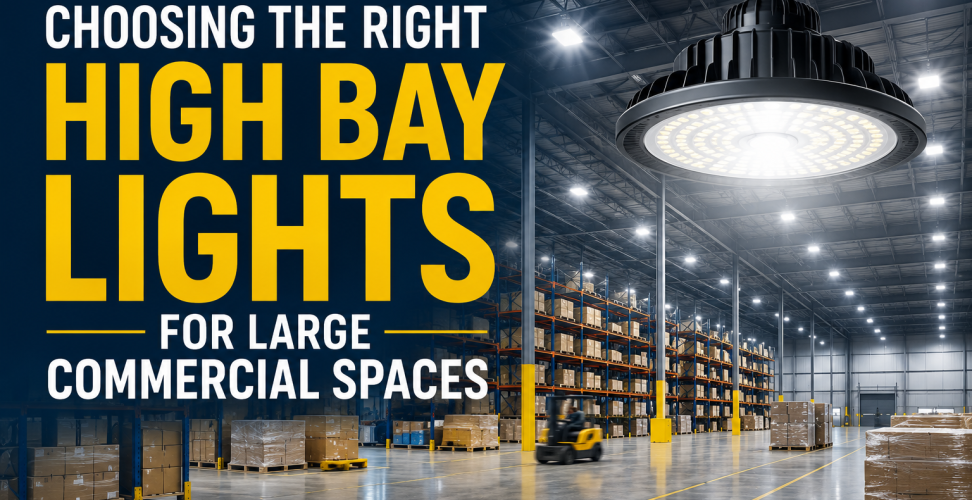
Large commercial spaces require lighting systems that provide consistent brightness, energy efficiency, durability, and long-term cost savings. Warehouses, manufacturing plants, distribution centers, retail stores, gymnasiums, and industrial facilities all depend on reliable lighting to maintain productivity, improve safety, and create comfortable environments for employees and visitors.
Selecting the correct high bay lighting is more than simply choosing fixtures with the highest lumen output. Factors such as mounting height, energy efficiency, beam angles, maintenance requirements, and operational costs all play critical roles in making the right decision.
At J&H LED, commercial property owners and facility managers can find high-performance lighting solutions designed specifically for demanding commercial environments. Understanding how to choose the right high bay lighting can help maximize performance while reducing operating expenses.
Understanding High Bay Lighting
High bay lighting refers to fixtures specifically designed for spaces with high ceilings, typically ranging from 20 feet to over 45 feet. These fixtures deliver powerful illumination across large areas while maintaining uniform light distribution.
High bay fixtures are commonly installed in:
- Warehouses
- Manufacturing facilities
- Distribution centers
- Retail spaces
- Sports facilities
- Aircraft hangars
- Storage buildings
- Commercial workshops
Traditional lighting technologies such as metal halide or fluorescent fixtures have historically dominated these applications. However, modern LED technology has transformed commercial lighting by providing higher efficiency and improved reliability.
Why Commercial Spaces Need Proper High Bay Lighting
Lighting directly impacts workplace efficiency, safety, operational costs, and employee productivity. Poor lighting can create shadows, dark spots, and uncomfortable working conditions.
Proper high bay lighting provides:
Improved Safety
Large commercial spaces often involve moving equipment, forklifts, machinery, and inventory handling. Adequate illumination helps employees navigate safely and reduces workplace accidents.
Increased Productivity
Employees perform tasks more effectively when workspaces are properly illuminated. Better visibility supports faster operations and reduces mistakes.
Lower Energy Consumption
Modern LED systems consume significantly less electricity compared to older lighting technologies.
Reduced Maintenance Costs
Replacing fixtures in high-ceiling environments can be expensive and time-consuming. Longer-lasting lighting solutions reduce maintenance frequency.
Determine Ceiling Height First
One of the first considerations when selecting high bay fixtures is ceiling height.
General recommendations include:
20–25 Foot Ceilings
Lower wattage fixtures often provide sufficient illumination for these spaces.
25–35 Foot Ceilings
Medium output fixtures typically work best for balanced brightness.
35–45+ Foot Ceilings
Higher lumen fixtures become necessary to ensure light reaches working surfaces effectively.
Improper fixture selection can create uneven lighting, wasted energy, or inadequate visibility.
Understanding Lumens Instead of Watts
Many buyers mistakenly focus primarily on wattage when evaluating lighting products. Wattage measures energy consumption—not brightness.
Lumens determine actual light output.
Typical lumen requirements:
- Small warehouses: 10,000–20,000 lumens
- Medium commercial facilities: 20,000–35,000 lumens
- Large industrial operations: 35,000+ lumens
Modern LED fixtures provide substantially more lumens per watt than older technologies, making them more efficient.
Choosing the Right Beam Angle
Beam angle significantly affects light distribution.
Narrow Beam Angles
These focus light downward and work well for extremely high ceilings.
Medium Beam Angles
Provide balanced illumination suitable for many warehouses.
Wide Beam Angles
Cover larger floor areas and work well for lower ceiling heights.
Selecting the wrong beam angle may create bright spots or dark areas.
Consider Color Temperature Carefully
Color temperature affects visibility and workplace comfort.
3000K
Creates warmer light and is commonly used in hospitality environments.
4000K
Produces neutral white illumination suitable for many commercial applications.
5000K
Provides daylight-style brightness often preferred in warehouses and industrial spaces.
Many commercial environments prefer cooler temperatures because they improve visibility and contrast.
Energy Efficiency Matters More Than Ever
Commercial buildings face increasing pressure to reduce operational costs.
Modern High Bay LED Lights dramatically reduce electricity consumption compared to older lighting systems.
Benefits include:
- Lower utility bills
- Reduced carbon footprint
- Less heat generation
- Lower cooling costs
- Improved overall efficiency
Energy savings often justify upgrading older lighting systems.
Fixture Durability Is Essential
Commercial environments can expose fixtures to challenging conditions including:
- Dust
- Moisture
- Temperature fluctuations
- Vibrations
- Industrial contaminants
Choosing durable fixtures helps ensure long-term performance.
Features to consider:
Strong Housing Materials
Aluminum housings improve heat dissipation and durability.
Protective Lens Construction
Durable lenses help protect LEDs from damage.
Quality Heat Management
Proper thermal management extends fixture lifespan.
At J&H LED, durability remains a priority because commercial customers require lighting systems that perform consistently for years.
Linear High Bay vs UFO High Bay Fixtures
Commercial buyers frequently choose between two popular styles.
Linear High Bay Fixtures
Best suited for:
- Aisles
- Warehouses
- Retail spaces
- Long rectangular areas
Advantages:
- Even distribution
- Large coverage areas
- Familiar appearance
UFO High Bay Fixtures
Best suited for:
- Open floor plans
- Manufacturing facilities
- Gymnasiums
- Industrial environments
Advantages:
- Compact design
- High lumen output
- Easier installation
Understanding facility layout helps determine which style performs best.
Smart Controls and Dimming Options
Modern commercial lighting increasingly includes intelligent control systems.
Options include:
Motion Sensors
Reduce energy waste in low-traffic areas.
Occupancy Sensors
Automatically activate lighting when needed.
Dimming Systems
Allow businesses to adjust brightness levels.
Daylight Harvesting
Reduces artificial lighting when sunlight is available.
Adding controls improves efficiency and reduces long-term operating costs.
Maintenance Considerations for Large Facilities
Maintenance expenses often get overlooked during fixture selection.
Commercial facilities should evaluate:
- Fixture lifespan
- Ease of installation
- Replacement accessibility
- Warranty coverage
LED systems typically require significantly less maintenance than traditional technologies.
This becomes especially valuable in high-ceiling spaces where accessing fixtures requires specialized equipment.
Calculate Total Cost Instead of Initial Price
The cheapest fixture rarely delivers the best long-term value.
Consider:
Energy Costs
More efficient fixtures reduce monthly expenses.
Maintenance Costs
Longer lifespans lower replacement frequency.
Installation Costs
Simpler installations reduce labor expenses.
Downtime Costs
Reliable fixtures minimize operational interruptions.
Commercial buyers should focus on lifecycle costs rather than purchase price alone.
Importance of Proper Fixture Spacing
Incorrect spacing creates uneven illumination.
Factors influencing spacing include:
- Ceiling height
- Fixture output
- Beam angle
- Facility layout
- Workstation locations
Professional lighting layouts help optimize performance while avoiding over-lighting.
Compliance and Safety Standards
Commercial lighting installations should meet applicable safety standards.
Look for fixtures with:
- Proper certifications
- Commercial-grade construction
- Reliable electrical components
- Appropriate ingress protection ratings
Quality fixtures help maintain safe and compliant operations.
Why LEDs Have Become the Commercial Standard
Traditional lighting technologies struggle to compete with modern LED systems.
LED advantages include:
- Higher efficiency
- Longer lifespan
- Instant startup
- Lower maintenance
- Better light quality
- Reduced heat output
These advantages explain why High Bay LED Lights have become the preferred choice for large commercial spaces.
Choosing a Reliable Commercial Lighting Partner
Selecting the right manufacturer matters just as much as selecting the right fixture.
Commercial buyers benefit from suppliers that provide:
- Product variety
- Technical support
- Consistent quality control
- Commercial expertise
- Reliable warranties
J&H LED focuses on delivering commercial-grade lighting solutions designed for warehouses, parking lots, industrial spaces, apartment complexes, and outdoor applications.
From high bay fixtures to wall packs, bollards, canopy lights, and post-top solutions, businesses need lighting systems capable of delivering reliable performance under demanding conditions.
Conclusion
Choosing the right high bay lighting involves balancing brightness, efficiency, durability, and long-term value. Every commercial space has unique lighting requirements based on ceiling height, layout, operational needs, and energy goals.
Investing in quality lighting improves workplace safety, supports productivity, reduces maintenance costs, and creates more efficient commercial environments.
Whether upgrading an existing facility or planning a new construction project, selecting the proper high bay solution can have a lasting impact on operational performance.
With commercial-grade solutions from J&H LED, businesses can confidently invest in lighting systems designed to deliver powerful illumination, energy savings, and dependable long-term performance.