Energy efficiency has become one of the most important priorities for businesses operating commercial facilities today. Rising utility costs, sustainability goals, and the demand for more productive work environments are pushing businesses to rethink how their commercial spaces consume energy. Whether managing office buildings, warehouses, retail stores, apartment complexes, parking facilities, or industrial spaces, improving energy efficiency delivers measurable financial and operational benefits.
Modern commercial spaces require smart strategies that reduce waste while improving performance. From lighting upgrades to building automation, businesses have numerous opportunities to create more efficient spaces without compromising productivity or safety.
At J&H LED, energy efficiency is more than simply reducing electricity bills—it is about creating smarter environments that support long-term business growth, sustainability, and operational excellence.
Why Energy Efficiency Matters in Commercial Spaces
Commercial buildings consume significant amounts of electricity every day. Lighting systems, HVAC equipment, computers, machinery, security systems, and other operational components all contribute to energy consumption.
Improving energy efficiency provides multiple advantages:
- Lower operating costs
- Reduced utility expenses
- Improved employee comfort
- Lower maintenance requirements
- Enhanced sustainability efforts
- Increased property value
- Better lighting and visibility
- Reduced environmental impact
Energy efficiency investments often generate long-term savings while improving overall building performance.
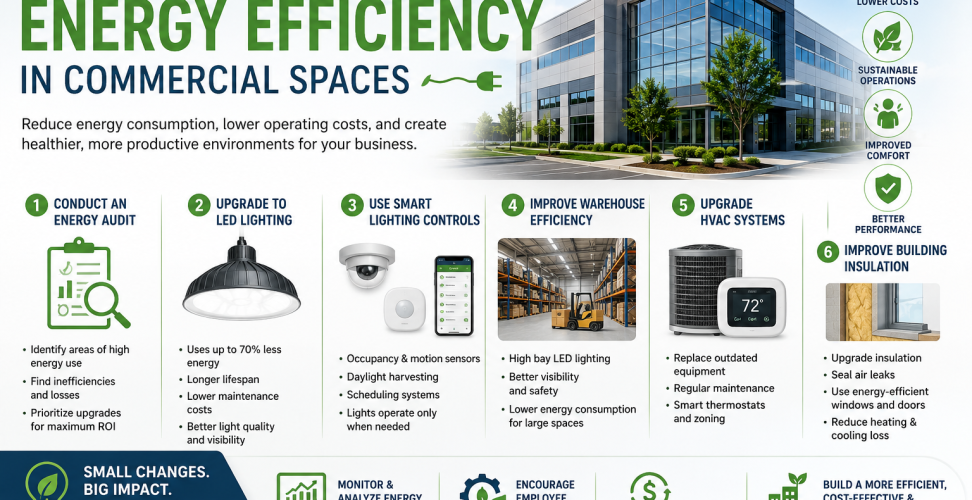
Conduct an Energy Audit First
Before implementing improvements, businesses should understand where energy is being consumed.
An energy audit helps identify:
- Areas with excessive electricity use
- Outdated equipment consuming excess power
- Inefficient lighting systems
- HVAC performance issues
- Opportunities for automation
- Peak usage periods
Energy audits provide data-driven insights that help prioritize upgrades and maximize return on investment.
Commercial buildings frequently discover that lighting represents one of the easiest and fastest areas for improvement.
Upgrade to Energy-Efficient Lighting Systems
Lighting typically represents a major portion of commercial electricity consumption. Older fluorescent, metal halide, and high-pressure sodium fixtures consume significantly more energy than modern alternatives.
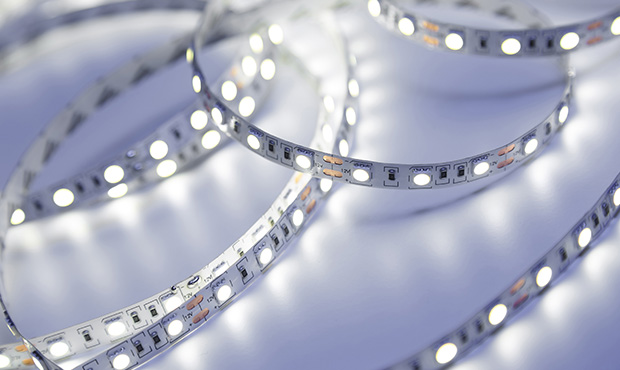
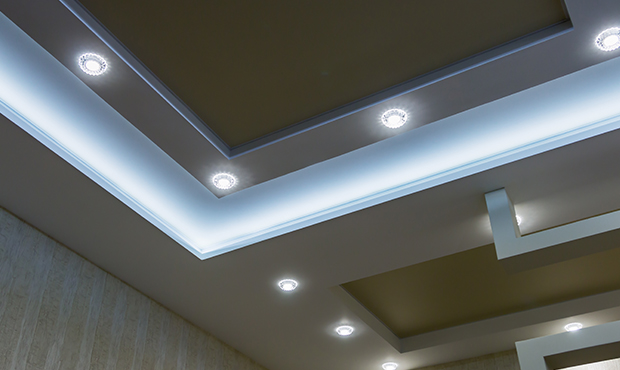
Replacing outdated fixtures with Commercial LED Lighting solutions offers immediate benefits:
- Lower energy consumption
- Longer fixture lifespan
- Reduced maintenance costs
- Better brightness consistency
- Improved safety
- Enhanced visibility
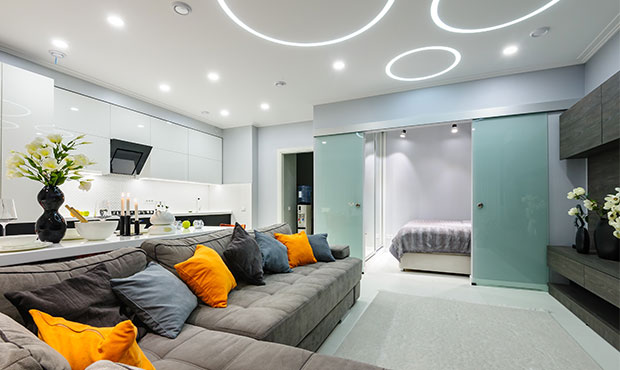
Warehouses, office buildings, parking lots, apartment complexes, and outdoor spaces particularly benefit from LED technology because these environments often require long operating hours.
J&H LED specializes in lighting solutions designed specifically for commercial and industrial applications where performance and energy savings matter most.
Use Smart Lighting Controls
Installing efficient lighting alone is not always enough. Smart controls maximize efficiency by ensuring lighting operates only when necessary.
Popular lighting controls include:
Occupancy Sensors
Occupancy sensors automatically switch lights on and off based on room usage. These systems work especially well in:
- Restrooms
- Storage areas
- Conference rooms
- Warehouses
- Hallways
Motion Sensors
Motion sensors are commonly used for:
- Parking areas
- Outdoor spaces
- Security lighting
- Stairwells
Daylight Harvesting
Daylight harvesting systems adjust artificial lighting based on available sunlight.
Benefits include:
- Reduced electricity consumption
- Better user comfort
- Lower cooling loads
Scheduling Systems
Automated schedules ensure lights operate only during required hours.
Combined with LED upgrades, smart controls can dramatically reduce overall energy consumption.
Improve Warehouse Efficiency Through Better Lighting
Warehouses present unique energy challenges because of:
- High ceilings
- Large floor areas
- Extended operating hours
- Continuous equipment usage
High bay LED fixtures significantly improve warehouse efficiency because they:
- Produce higher lumen output
- Require less maintenance
- Improve visibility
- Consume less electricity
Modern warehouses increasingly rely on Commercial LED Lighting because consistent illumination improves productivity while reducing operational costs.
J&H LED offers lighting solutions specifically designed for warehouse environments where durability and performance are essential.
Upgrade HVAC Systems
Heating and cooling systems often represent the largest energy expense in commercial buildings.
Businesses can improve HVAC efficiency by:
Replacing Outdated Equipment
Older HVAC systems consume significantly more power.
Modern systems provide:
- Higher efficiency ratings
- Improved temperature control
- Reduced maintenance requirements
Regular Maintenance
Routine maintenance improves efficiency by:
- Cleaning filters
- Checking refrigerant levels
- Inspecting duct systems
- Optimizing airflow
Smart Thermostats
Smart thermostats automatically adjust temperatures based on occupancy and schedules.
Benefits include:
- Lower heating costs
- Reduced cooling expenses
- Improved comfort
Zone-Based Temperature Control
Different areas often require different temperatures.
Zoning prevents:
- Overcooling unused spaces
- Heating empty rooms
- Excess energy consumption
Improve Building Insulation
Energy efficiency is not only about equipment—it also involves reducing energy loss.
Commercial buildings lose energy through:
- Poor insulation
- Drafts
- Inefficient windows
- Air leaks
Improvement strategies include:
Upgrade Insulation
Better insulation reduces:
- Heating requirements
- Cooling loads
- Temperature fluctuations
Seal Air Leaks
Common leakage areas include:
- Doors
- Windows
- Roof penetrations
- Utility openings
Install Energy-Efficient Windows
Modern windows improve insulation while reducing heat transfer.
These improvements reduce the workload on HVAC systems and lower overall energy usage.
Use Building Automation Systems
Building automation allows businesses to monitor and control energy usage more effectively.
Automation systems can manage:
- Lighting schedules
- HVAC controls
- Security systems
- Equipment monitoring
- Occupancy tracking
Benefits include:
- Reduced waste
- Lower labor costs
- Real-time energy insights
- Improved operational efficiency
Smart buildings increasingly rely on automation to optimize performance continuously.
Reduce Outdoor Lighting Waste
Parking lots, apartment complexes, and outdoor commercial spaces often waste energy through inefficient lighting systems.
Outdoor lighting improvements include:
Replace Old Fixtures
Older fixtures often:
- Produce poor illumination
- Require frequent maintenance
- Consume excessive power
Use Directional Lighting
Directional fixtures reduce unnecessary light spill.
Benefits include:
- Better visibility
- Reduced wasted energy
- Improved safety
Install Timers and Sensors
Outdoor lighting should operate only when needed.
Timers and motion controls help minimize unnecessary runtime.
Modern Commercial LED Lighting systems provide better outdoor illumination while consuming far less electricity.
Optimize Equipment Usage
Commercial spaces contain numerous electrical systems beyond lighting and HVAC.
Businesses should evaluate:
- Computers
- Printers
- Manufacturing equipment
- Refrigeration systems
- Elevators
- Kitchen equipment
Strategies include:
Replace Inefficient Equipment
Newer equipment generally offers:
- Better efficiency
- Lower operating costs
- Reduced downtime
Use Power Management Settings
Automatic sleep modes reduce unnecessary electricity consumption.
Eliminate Phantom Loads
Many devices consume electricity even when not actively used.
Power strips and automatic shutoffs help reduce these losses.
Encourage Employee Participation
Energy efficiency efforts become more successful when employees participate.
Organizations can encourage:
- Turning off unused equipment
- Reporting maintenance issues
- Following energy policies
- Using natural lighting when possible
Creating awareness often generates measurable savings with little investment.
Monitor Energy Usage Regularly
Businesses should continuously track energy performance.
Monitoring provides visibility into:
- Consumption trends
- Peak demand periods
- Equipment performance
- Areas requiring improvement
Tracking helps organizations identify problems before they become expensive.
Useful metrics include:
- Energy cost per square foot
- Monthly electricity usage
- Peak demand charges
- Equipment efficiency
Continuous monitoring supports long-term optimization.
Invest in Durable, Long-Lasting Solutions
Short-term savings often lead to higher long-term costs.
Commercial facilities benefit from investing in:
- Durable fixtures
- Quality materials
- Reliable equipment
- Scalable systems
High-quality lighting systems reduce:
- Replacement costs
- Maintenance expenses
- Operational disruptions
J&H LED focuses on durable commercial lighting solutions built to withstand harsh environments, vibration, dust, and demanding operating conditions.
Long-lasting equipment provides stronger returns over time.
Sustainability and Energy Efficiency Go Together
Many businesses now prioritize sustainability initiatives alongside cost reduction.
Energy-efficient commercial spaces support:
- Lower carbon emissions
- Reduced energy demand
- Corporate sustainability goals
- Green building certifications
Customers, tenants, and employees increasingly value organizations that prioritize environmental responsibility.
Energy efficiency therefore becomes both a financial and strategic investment.
Future Trends in Commercial Energy Efficiency
Commercial spaces continue evolving through new technologies.
Emerging trends include:
Smart Buildings
Connected systems automatically optimize energy consumption.
Advanced Sensors
Sensors provide better occupancy tracking and usage monitoring.
Integrated Lighting Systems
Lighting increasingly works alongside HVAC and security systems.
AI-Based Optimization
Artificial intelligence helps buildings continuously improve efficiency.
Businesses adopting these technologies gain long-term competitive advantages.
Conclusion
Improving energy efficiency in commercial spaces requires a combination of smart planning, technology upgrades, automation, and long-term thinking. Businesses that prioritize efficiency benefit from lower costs, better performance, improved safety, and stronger sustainability outcomes.
Lighting upgrades remain one of the fastest and most effective ways to reduce energy consumption. By adopting modern LED solutions, implementing automation, improving building systems, and monitoring performance, businesses create spaces that operate smarter and more efficiently.
J&H LED helps commercial property owners, warehouse operators, facility managers, and businesses improve visibility, reduce operational expenses, and create more efficient environments through high-performance lighting solutions designed specifically for demanding commercial applications.
Investing in energy efficiency today creates commercial spaces that perform better tomorrow.